
EYE DISEASES
Glaucoma – Green Cataract
Glaucoma is not a single diagnosis or disease. It is a group of conditions that share a common feature – damage or even death of the optic nerve in both eyes, caused by high intraocular pressure, ultimately leading to vision loss.

Types of Glaucoma
Angle-closure glaucoma (acute glaucoma) – This form has an anatomical basis, where the iris blocks the drainage angle in the eye, causing a sudden and acute increase in intraocular pressure and resulting in blindness. It requires immediate intervention, usually surgical.
Open-angle glaucoma (chronic glaucoma) – This form develops slowly and often without noticeable symptoms. The angle between the cornea and iris remains open, but the aqueous humor either doesn’t drain properly or is overproduced, leading to increased pressure in the eye. This type is typically treated with medication – usually eye drops.
Normal-tension glaucoma – The optic nerve becomes damaged even though intraocular pressure remains within the normal range.
Secondary glaucoma – Develops as a result of eye injuries or surgeries, and can be triggered by medications.
Symptoms
Normal intraocular pressure ranges between 10–20 mmHg. Elevated pressure often goes unnoticed, so it is essential to measure intraocular pressure during every eye examination, even at an optician’s. Undetected pressure can pose a hidden threat. Many patients only seek help once some degree of optic nerve damage has already occurred due to rising pressure they didn’t feel. Only once vision deteriorates or pain appears do they come for an exam.
Causes of Glaucoma
High intraocular pressure is the primary cause of glaucoma. However, several other factors can contribute to its development:
Genetic and Congenital Factors:
– It may be hereditary – if parents or grandparents had it, the risk increases.
Age and Gender:
– Most common after the age of 40, with increasing risk as one ages.
Angle-closure glaucoma is more frequent in women due to narrower chamber angles.
Health Conditions and Diseases:
– Diabetes – increases the risk of damage to ocular blood vessels.
– High blood pressure – can worsen blood supply to the optic nerve.
– Low blood pressure – may reduce oxygen supply to the nerve.
– Migraines – may affect blood flow to the eye.
– Myopia (nearsightedness) – more often associated with open-angle glaucoma.
– Hypermetropia (farsightedness) – more often associated with angle-closure glaucoma.
Eye Trauma and Injuries:
– Blows to or injuries of the eye can damage the drainage system and cause secondary glaucoma.
Long-term Use of Certain Medications:
– Corticosteroids (e.g., for asthma, allergies, or skin conditions) can increase intraocular pressure.
Eye Diseases and Surgeries:
– Cataracts – in advanced stages may block fluid outflow.
– Eye inflammations (e.g., uveitis, iritis) – can lead to increased pressure.
– Previous eye surgeries – may disrupt fluid balance in the eye.
Treatment of Glaucoma
The primary treatment is pharmacological – eye drops that lower intraocular pressure.
Glaucoma Treatment with SLT Laser
A new approach in the management of glaucoma, specifically in patients with open-angle glaucoma, is the use of the latest SLT laser technology. It provides a safe, gentle, and effective solution for lowering intraocular pressure. This is a non-invasive, quick procedure performed on an outpatient basis. The treatment is fully covered by health insurance, and patients incur no additional costs.
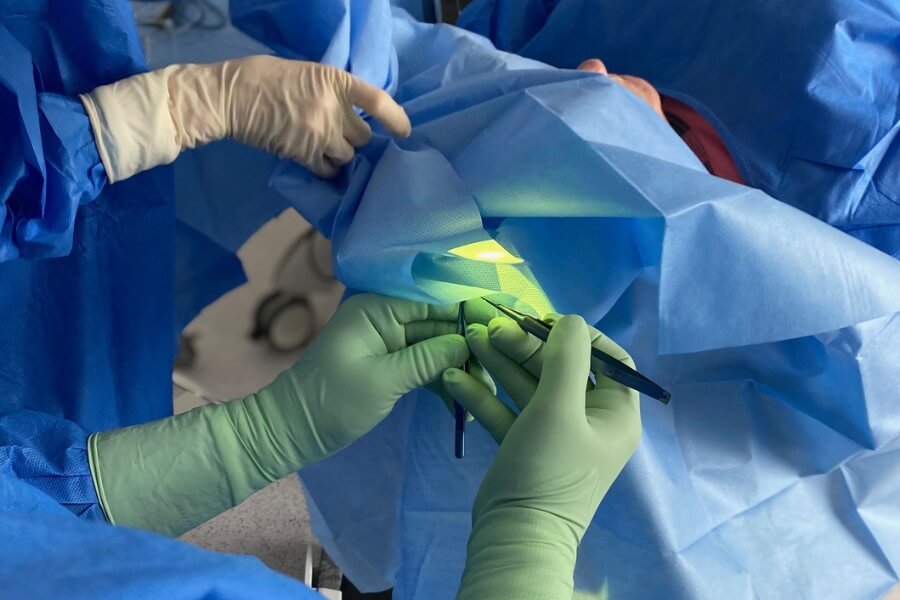
Glaucoma Surgery
Intraocular pressure can also be reduced through surgical procedures, particularly in more severe cases of glaucoma. For some types of glaucoma, laser procedures are effective. At our eye center, we offer laser treatment – YAG laser iridotomy – mainly for angle-closure glaucoma or cases where the chamber angle is closed.
Glaucoma is also treated with filtering surgeries – trabeculectomy – a surgical procedure where the surgeon creates a drainage channel to the conjunctiva, allowing the aqueous humor to escape and reduce intraocular pressure.
The procedure basal iridectomy is an operation for glaucoma, where the surgeon creates a small opening, a “window,” in the iris to allow fluid drainage.
During the procedure, you can rely on our team of specialists.
MUDr. Peter Böhm - Medical Director, Dr. Böhm Eye Center
In addition to performing cataract, retina and vitreous surgeries, he also specializes in the
comprehensive diagnosis and treatment of glaucoma.

MUDr. Peter Böhm Jr. - Cataract & Retina Surgeon
He is the lead retinal surgeon at the eye center and also performs cataract surgeries and treats
complications related to cataract operations.

Better to book today
We have many satisfied clients and patients waiting.