
EYE DISEASES
Amblyopia (Lazy Eye)
Amblyopia (from the Latin amblyopia) is one of the common visual disorders, affecting 5–8% of the population. It is a condition in which one eye does not achieve normal visual acuity, even when
properly corrected with glasses or contact lenses. It is referred to as a “lazy” eye because the brain favors the image from the better-seeing eye and suppresses the weaker one.

What Are the Symptoms?
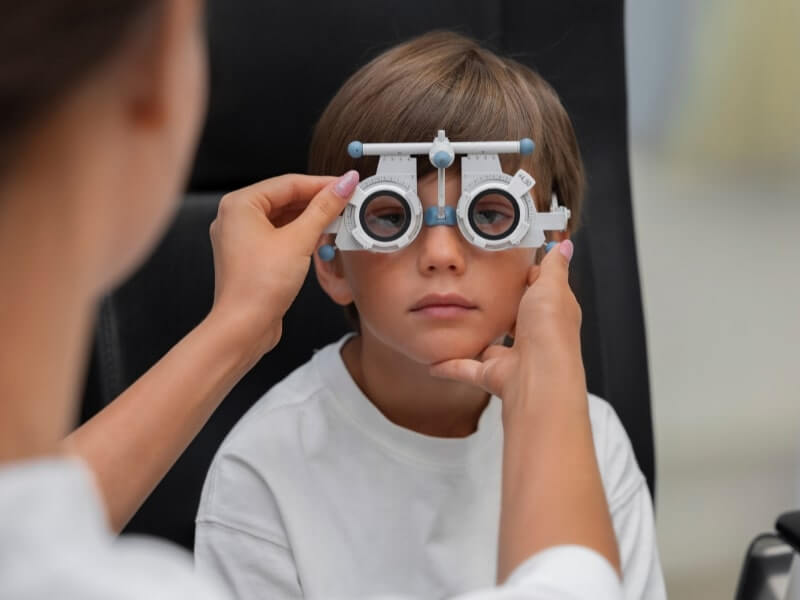
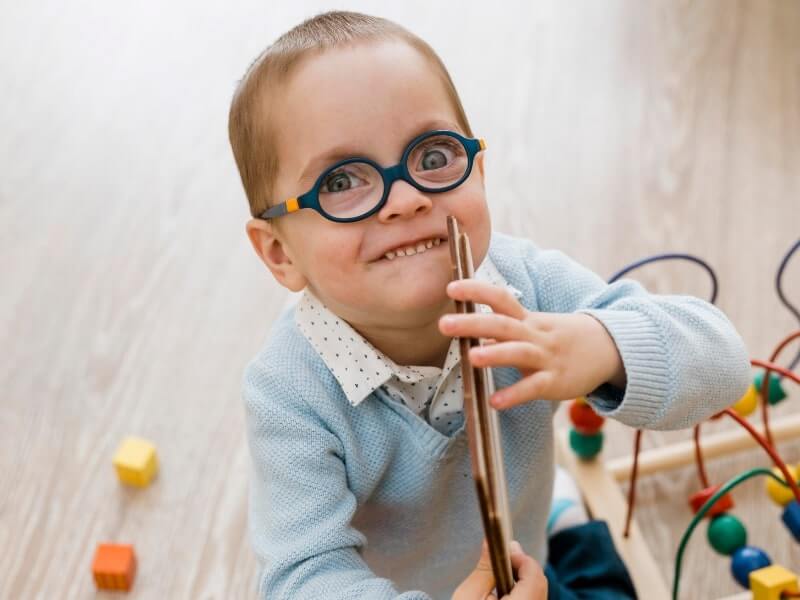
This condition has several symptoms, such as reduced vision in one eye (sometimes in both eyes), difficulty focusing and perceiving details. A patient with amblyopia has a harder time judging distances due to altered spatial perception. A common manifestation is strabismus (crossed eyes). The eyes tend to fatigue quickly, and the patient may experience headaches after prolonged focusing. In children, one might notice a preference for one eye, often by turning the head to one side to see better.
Source: freepik.com
What Causes Amblyopia?
Put simply, amblyopia develops when the brain fails to learn how to properly use the eyes, always during early childhood. It is a disorder in how the brain interprets images on the retina when strabismus is present, or when there’s a significant difference in refractive power (diopters) between the two eyes. In such cases, the brain receives two conflicting images and begins to “turn off” one of them. This results in reduced depth perception, absence of 3D vision, and poor contrast or detail recognition.
The most common causes of amblyopia include: strabismus – crossed eyes, where the brain suppresses the image from one eye to avoid double vision. Anisometropia, the aforementioned significant difference in diopters between the two eyes, is another frequent cause of amblyopia. In this case, one eye sees clearly while the other sees blurred.
How Is Amblyopia Treated?
Treatment differs between children and adults and is significantly more successful in children. Early diagnosis is key. The child’s brain—especially before the age of six—is much more flexible and capable of correction than that of an adult. Therefore, treatment in children can lead to complete resolution, whereas in adults with a stabilized visual system, the success rate is very low.
Therapy and Exercises
A highly effective method in amblyopia treatment is eye exercises known as orthoptics. These are specialized exercises that improve eye coordination, primarily used with children, and are most successful in preschool-aged kids. It’s a type of rehabilitation aimed at improving visual functions and balancing both eyes. Pleoptic exercises focus on stimulating the weaker eye, for example by total occlusion—completely covering the dominant eye to force the lazy one to work harder.
In general, exercises help improve visual perception, fixation, and cooperation between both eyes.
Amblyopia is most often treated by:
• Occlusion therapy: Covering the healthy eye to force the weaker eye to focus and function.
• Corrective lenses: Glasses or contact lenses to address refractive errors.
• Atropine drops: Applied to the healthy eye to blur vision and stimulate the lazy eye.
Today, treatment is available even for children older than six using 3D virtual reality. Through games and exercises with 3D glasses, children train the lazy eye by displaying related images so that the healthy eye sees less sharply and with lower brightness, while the amblyopic eye sees a clear, sharp image. This merges the images into the desired visual perception.
During the procedure, you can rely on our team of specialists.
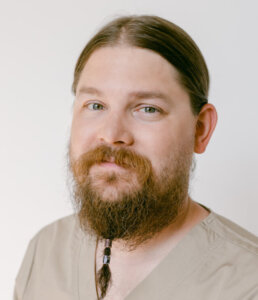
MUDr. Peter Böhm - Medical Director, Dr. Böhm Eye Center
In addition to performing cataract, retina and vitreous surgeries, he also specializes in the
comprehensive diagnosis and treatment of glaucoma.

MUDr. Peter Böhm Jr. - Cataract & Retina Surgeon
He is the lead retinal surgeon at the eye center and also performs cataract surgeries and treats
complications related to cataract operations.
Better to book today
We have many satisfied clients and patients waiting.