
EYE DISEASES
Astigmatism
Astigmatism – let’s call it an imperfection of the eye – is a condition in which the cornea or lens does not have the correct curvature it should have. The uneven, curved shape of the cornea and lens bends incoming light rays to points other than the retina, creating two different images. This results in blurred and unclear vision at all distances, both near and far. This refractive error of the eye is not age-dependent and occurs in both children and elderly patients.
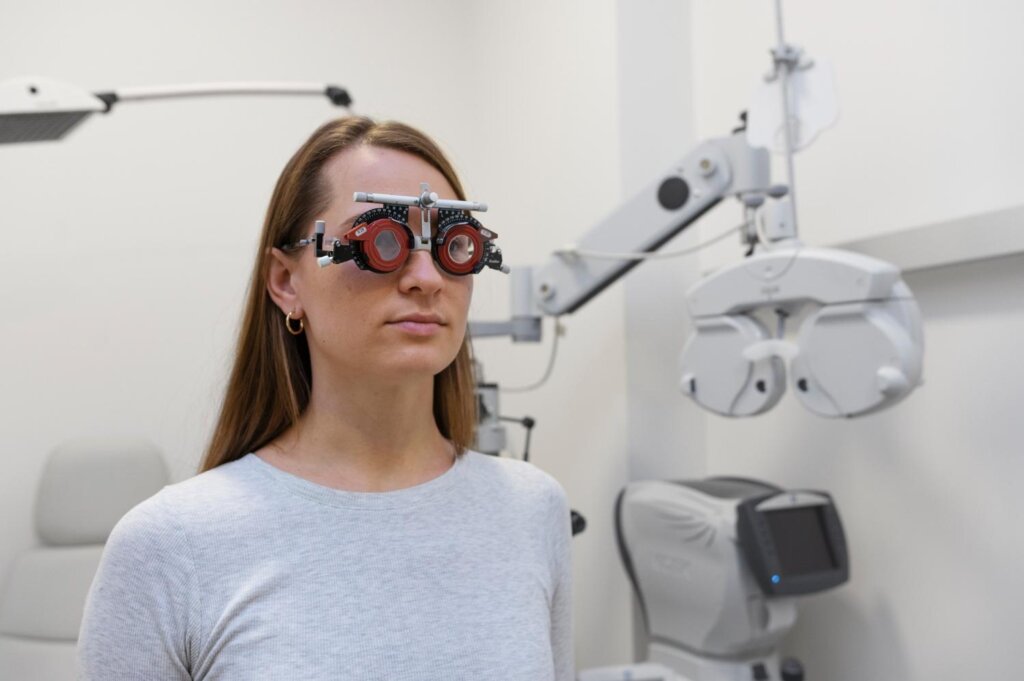

Types of Astigmatism
1. Corneal astigmatism – caused by an irregular curvature of the cornea.
2. Lenticular astigmatism – results from an irregular shape of the eye’s lens.
3. Mixed astigmatism – can occur on its own or in combination with farsightedness
(hyperopia/hypermetropia) or nearsightedness (myopia).
How does it manifest?
Astigmatism can present in various ways, depending on its severity. Mild forms may go unnoticed,
while more severe astigmatism can significantly impact quality of life.
Most common symptoms of astigmatism:
– blurred, distorted, or warped vision at all distances,
– burning or stinging eyes,
– headaches, especially after prolonged visual focus,
– eye fatigue after reading or working on a computer,
– distortion of shapes, for example, straight lines may appear wavy or blurred,
– squinting,
– poor spatial orientation,
– hair loss.
If these symptoms are present, it is important to visit an ophthalmologist, who will provide an accurate diagnosis.

Source: freepik.com
Causes of Astigmatism
Astigmatism can arise from various causes, with the most common being:
- Genetics – a congenital defect. If one or both parents have astigmatism, their children are at higher risk.
- Eye surgeries or injuries – certain eye surgeries or trauma can alter the shape of the cornea, causing astigmatism.
- Corneal diseases – keratoconus is a progressive corneal disease in which the cornea becomes irregularly cone-shaped, worsening astigmatism. Corneal inflammation, such as ulcers or herpes of the cornea, can also cause it.
- Environmental influences and poor visual habits – excessive screen use and poor lighting may affect eye health, although they do not directly cause astigmatism.
- Age – astigmatism can develop naturally with age, as the lens continuously grows (like hair and nails), slightly altering its shape over time.
Astigmatism in Children
Astigmatism can be present from early childhood but is often hard to detect. Parents should be alert if a child complains of headaches, poor near or distance vision, or eye fatigue, which can impact academic performance.
Early diagnosis and correction with glasses or contact lenses can prevent the development of amblyopia (lazy eye), which often occurs in untreated childhood astigmatism. Parents must not neglect preventive eye exams – screenings in kindergartens can help detect the condition early.
Treatment of Astigmatism
Astigmatism can be effectively corrected in various ways, both conservatively and surgically. The most common options include:
1. Glasses – cylindrical lenses compensate for corneal irregularities.
2. Contact lenses – toric lenses are specially designed to correct astigmatism.
3. Orthokeratology – night lenses – special rigid lenses worn during sleep temporarily reshape the cornea.
4. Pharmacological treatment – while astigmatism itself cannot be treated with medication, certain eye drops may help with accompanying symptoms such as dry eyes.
Eye Surgery for Astigmatism Correction
There are several excimer laser procedures available for correcting this refractive defect. At the Dr. Böhm Eye Center, we offer surgical treatment for astigmatism using the PRELEX method, based on an individual consultation between the doctor and the patient. This procedure involves replacing the natural lens with an artificial intraocular toric lens, which also acts as a preventative measure against the most common age-related condition – cataracts. The toric lens also corrects cylindrical diopters.
The artificial intraocular lens does not become cloudy over time like the natural lens, so the patient is proactively protected from developing cataracts. Additionally, by selecting the right artificial lens and conducting thorough specialized preoperative examinations, the new lens restores visual sharpness and can eliminate the need for glasses or contact lenses.
Astigmatism is a common visual defect that significantly impacts quality of life, which is why early diagnosis and regular eye check-ups are key to maintaining healthy vision.
During the procedure, you can rely on our team of specialists.
MUDr. Peter Böhm - Medical Director, Dr. Böhm Eye Center
In addition to performing cataract, retina and vitreous surgeries, he also specializes in the
comprehensive diagnosis and treatment of glaucoma.
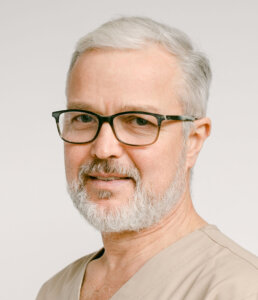
MUDr. Peter Böhm Jr. - Cataract & Retina Surgeon
He is the lead retinal surgeon at the eye center and also performs cataract surgeries and treats
complications related to cataract operations.

Better to book today
We have many satisfied clients and patients waiting.