
EYE DISEASES
Presbyopia
Presbyopia is a common age-related refractive error that involves a gradual loss of the ability to focus on nearby objects. It is often referred to as “age-related farsightedness” because it typically begins to manifest after the age of forty.
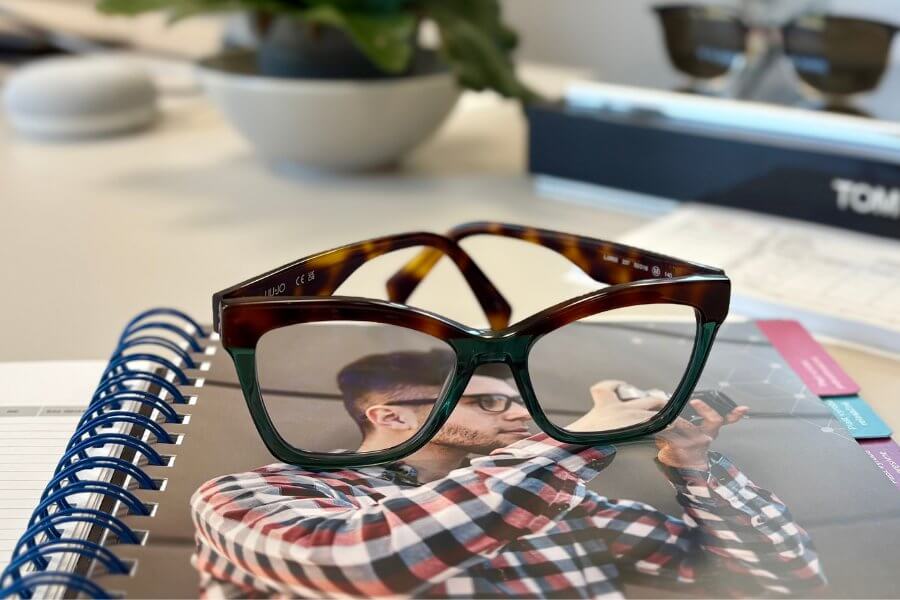

What is presbyopia and how does it present?
Presbyopia is a natural part of aging where the eye’s lens loses its elasticity. Presbyopia means the eye loses its ability to accommodate — that is, to quickly and effectively focus on close-up objects.
It typically presents as blurred near vision, the need to hold reading materials farther away, and frequent eye fatigue when reading. This condition is often humorously called the “long-arm syndrome” because people with presbyopia see text held at a normal reading distance as blurry. To focus, they continually move the text farther away, until even the distance of their fully extended arm is no longer enough.
How does presbyopia develop?
The main cause is the natural aging of the eye’s lens, which gradually loses its flexibility and ability to change shape to focus at various distances.
The lens continues to grow throughout life — like hair or nails — and becomes stiffer as new tissue forms. This ongoing process results in the eye’s inability to properly focus on nearby objects, causing blurred vision. It usually begins around age 40 and progressively worsens with age. This process is irreversible.
Presbyopia in children
Presbyopia does not occur in children, as their lenses are still highly flexible. Near vision issues in childhood are typically caused by other conditions, such as hyperopia (farsightedness).
How is presbyopia treated?
Treatment of presbyopia involves correcting vision using reading glasses, bifocal, or multifocal glasses. Another solution includes multifocal contact lenses. Surgical options involve laser procedures or the implantation of multifocal intraocular lenses using the PRELEX method, in which the natural lens is replaced with an artificial one to correct the refractive error.
For the patient, this also acts as a preventative measure against cataracts, since artificial intraocular lenses do not become cloudy over time like natural ones. Presbyopia surgery is one of the available solutions and always follows an individual consultation with a specialist.
During any procedure, you can rely on our expert specialists.
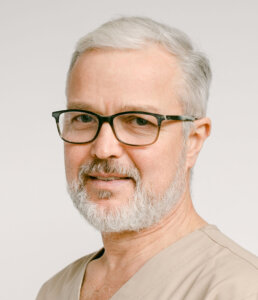
MUDr. Peter Böhm - Medical Director, Dr. Böhm Eye Center
In addition to performing cataract, retina and vitreous surgeries, he also specializes in the
comprehensive diagnosis and treatment of glaucoma.
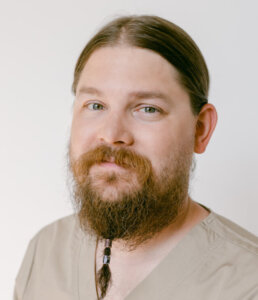
MUDr. Peter Böhm Jr. - Cataract & Retina Surgeon
He is the lead retinal surgeon at the eye center and also performs cataract surgeries and treats
complications related to cataract operations.
Better to book today
We have many satisfied clients and patients waiting.