
EYE DISEASES
Strabismus (Squinting)
Strabismus, medically referred to as strabismus, is a visual disorder in which the movements of the
two eyes are not properly coordinated when tracking an object.


It is an abnormal alignment of the eyes, where one or both eyes deviate from the correct line of sight. Strabismus is not merely an aesthetic concern. Instead of both eyes focusing on the same point, one eye may turn inward, outward, upward, or downward. This condition can occur in both childhood and adulthood.
Symptoms
Symptoms of strabismus can be obvious, but sometimes only a vigilant parent or physician may notice them. The most common signs include:
– Visible deviation of one eye (laterally, upward, or downward)
– Frequent squinting or covering of one eye
– Double vision (in adults)
– Eye fatigue and headaches
– Impaired depth perception and stereoscopic vision
– Difficulty concentrating while reading, watching screens, or (in children) playing
How does it develop?
Strabismus can arise from various causes, including:
– Dysfunction of the ocular muscles or nerves
– Refractive errors such as high farsihgttedness or astigmatism, especially with interocular differences
– Congenital developmental anomalies
– Neurological or systemic diseases
– Eye injury or ocular disease in adulthood
Diagnosis of Strabismus
Accurate diagnosis is essential for selecting appropriate treatment. Patients should undergo a comprehensive eye examination, which typically includes:
– Measurement of visual acuity and refractive error
– Assessment of eye alignment and ocular motility
– Testing binocular vision and stereopsis
– Additional neurological or orthoptic evaluations when a neurological cause is suspected
Strabismus in Childhood
Strabismus may develop in early childhood, most commonly between 6 months and 3 years of age. Therefore, the first eye examination is recommended around 6 months of age. Untreated strabismus can lead the child to “suppress” one eye, resulting in amblyopia (lazy eye).
Early diagnosis and intervention in children are crucial, as timely treatment is highly successful and can fully correct the condition. Pediatric strabismus is managed through:
– Prescription glasses
– Occlusion therapy (patching the stronger eye to strengthen the weaker eye)
– Orthoptic and pleoptic exercises
– In selected cases, surgical correction of the ocular muscles
Strabismus in Adults
In adults, strabismus may:
– Persist from childhood (if not fully treated)
– Arise after trauma, infection, neurological disease, or surgery
– Cause significant double vision, reducing quality of life
This disorder can affect depth perception and spatial awareness, which are important in many daily activities, including sports.
Common treatment approaches include:
– Prismatic lenses (to correct double vision)
– Surgical realignment of the ocular muscles
– In some cases, botulinum toxin injections
Treatment and Surgery
The goal of strabismus treatment is to achieve proper eye alignment, restore binocular vision, and prevent amblyopia or diplopia.
Strabismus surgery is a minimally invasive procedure on the ocular muscles, usually performed under general anesthesia (especially in children). It is considered only after all conservative measures have
been exhausted. Postoperatively, the eye may remain red for several days, but recovery is generally rapid.
In adults, surgery can be effective not only functionally but also aesthetically, improving ocular symmetry and enhancing self-confidence and self-esteem.
Strabismus significantly affects visual function, self-confidence, and daily life. Early detection and expert care can yield excellent outcomes across all age groups.
During the procedure, you can rely on our team of specialists.
MUDr. Peter Böhm - Medical Director, Dr. Böhm Eye Center
In addition to performing cataract, retina and vitreous surgeries, he also specializes in the
comprehensive diagnosis and treatment of glaucoma.
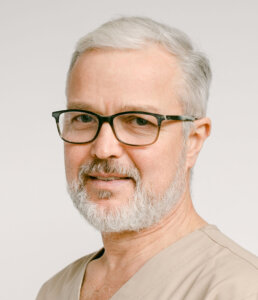
MUDr. Peter Böhm Jr. - Cataract & Retina Surgeon
He is the lead retinal surgeon at the eye center and also performs cataract surgeries and treats
complications related to cataract operations.

Better to book today
We have many satisfied clients and patients waiting.