
SURGERY
Cataract
Cataract surgeries have been our main specialization for more than 21 years. We are among the clinics that perform the highest number of procedures in Slovakia, approximately 3000 cataract
surgeries annually.
Cataract (cataracta) is among the most common causes of impaired vision in older age. As a result of many causes, including the natural aging of the human body, the intraocular lens loses its
transparency. It gradually becomes cloudy and starts to “harden.” The human lens, similarly to a camera lens, functions to focus the image onto the retina, which we could compare to the film in a
camera. If it loses transparency, the image quality deteriorates. Statistically, nearly every second person will develop a cataract. In people over 75 years old, it affects more than 70% of seniors.

Symptoms
The clouding of the intraocular lens manifests as worsening vision. Without surgical treatment, the disease could progress to the stage of blindness. In the early stages of the disease, you may not feel a significant deterioration of vision. Gradually, you may notice some of the following symptoms:

blurred vision and a hazy image

deterioration in color perception

sudden changes in diopters

unpleasant sensations when driving at dusk or at night
Examination Process
It is possible that your cataract has already been diagnosed by your ophthalmologist, but the first step toward surgery is a specialized examination at our clinic. During the examination, you will spend approximately 2 hours with us. You will undergo several measurements such as:
– autorefractometry – instrumental measurement of diopters,
– vision examination – visual acuity for distance and near vision,
– tonometry – intraocular pressure measurement,
– slit lamp examination before and after dilation (anterior part of the eye and retina),
– fundoscopy – examination of the ocular fundus, and
– OCT examination – to image the macula on the retina, the optic nerve, and the cornea.
After all measurements and examinations have been performed, the doctor will determine preventive measures and preparation for the surgical procedure. Before the surgery, you must also undergo a preoperative internal examination by your general practitioner, or another specialist if you are being treated for another condition. It must not be older than one month before the surgery.
Surgery
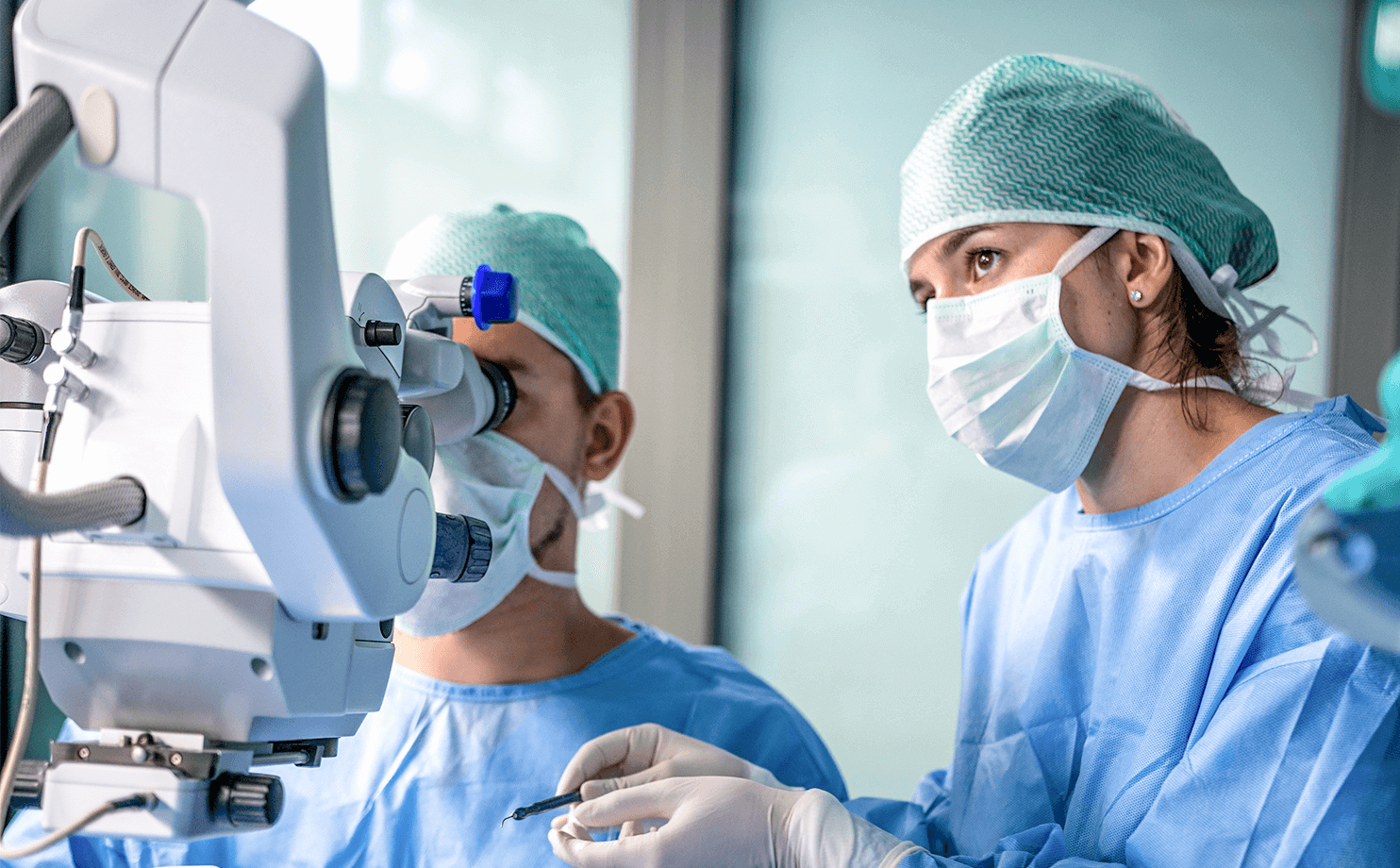
The only solution for removing cataract is surgery. It is the most common procedure performed on the human body. It is painless during the procedure as well as during healing. It takes approximately 10 minutes. During the operation, the eye surgeon removes your own clouded lens using phacoemulsification – ultrasound breaks the lens into small particles and aspirates it, and replaces it with a new, artificial one.
The most suitable type of intraocular lens will be recommended to you by the surgeon based on examinations and an individual consultation. The selection depends on your health condition. A wide range of intraocular lenses allows us, in addition to cataract removal, to eliminate various refractive errors and provide the patient with independence from prescription glasses after surgery. We typically offer 4 types of intraocular lenses that help the patient get rid of glasses, namely:
– Monofocal – a monofocal lens with one focus point that eliminates either distance vision diopters or reading glasses
– Toric – a monofocal lens with one focus point that also corrects astigmatism
– EDOF – an extended depth of focus lens that provides sharp vision at different distances, especially at intermediate and partially near distances, contributing to an active life without glasses
– Multifocal – a lens that completely eliminates the need for glasses both for distance and near vision.
At the Dr. Böhm Eye Center, we perform cataract surgery using a manual method without the use of a femtosecond laser. We choose this time-proven method because manual surgery can be done in a shorter time, usually within 10 minutes, and we do not financially burden the patient with an additional laser procedure that is not covered by any health insurance. Additionally, the use of the laser requires the patient to be transferred to another operating table during the surgery. The lens entry point, for which the laser is used, can be made by our experienced cataract surgeons with comparable precision to the laser technology. Moreover, the laser-made opening does not have the same strength as a manually created one and brings a higher risk of capsule rupture during or after the operation.
Cataract is a diagnosis of both eyes. Cataract surgery is worthwhile even in older patients, for example, 90-year-olds. People sometimes think they shouldn’t bother operating on a parent or grandparent in their eighties or even older. But age plays no role in removing cataract. “Almost every patient, even one suffering from chronic internal conditions, can handle the painless procedure,” says Chief Physician MUDr. Peter Böhm. The surgery is often a relief for older patients. “After years, they can once again spend their time meaningfully. They can see the newspaper again, solve crossword puzzles, watch TV, read, or if their health allows, go for a walk by themselves. We have cases where relatives bring grandma in a wheelchair because she couldn’t see and couldn’t move independently. After the cataract was removed and a new intraocular lens implanted, the patient came for a check-up the next day already on her own, on her own feet.”
During the procedure, you can rely on our team of specialists.
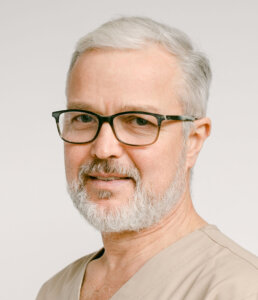
MUDr. Peter Böhm - Medical Director, Dr. Böhm Eye Center
In addition to performing cataract, retina and vitreous surgeries, he also specializes in the
comprehensive diagnosis and treatment of glaucoma.
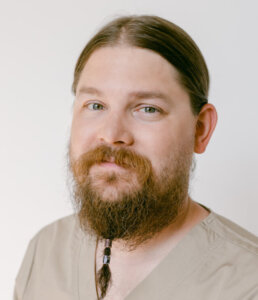
MUDr. Peter Böhm Jr. - Cataract & Retina Surgeon
He is the lead retinal surgeon at the eye center and also performs cataract surgeries and treats
complications related to cataract operations.
Better to book today
We have many satisfied clients and patients waiting.